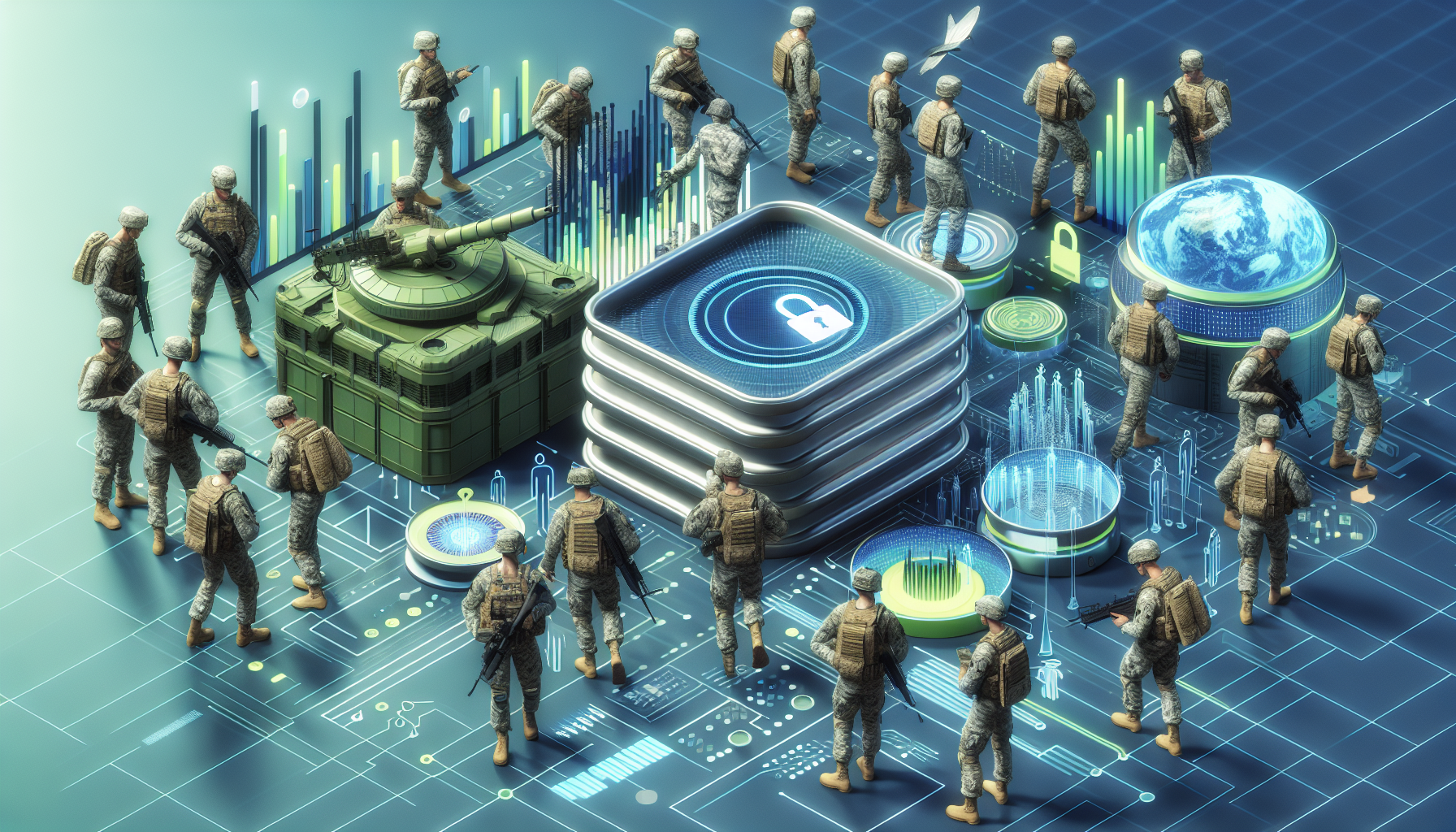
Project Linchpin: U.S. Army’s Leap Into Trusted AI
In the rapidly progressing world of artificial intelligence (AI) and machine learning (ML), the U.S. Army is endeavoring to ensure that reliability, accountability, and trust don’t fall behind. The service is currently developing a risk management framework for Project Linchpin, the Army’s pioneering program of record, constructed to foster a trusted AI/ML pipeline, as mentioned by Jen Swanson, the Deputy Assistant Secretary of the Army for Data, Engineering, and Software in a recent,Breaking Defense article .
Trust in AI: The Linchpin to Success
Project Linchpin epitomizes the Army’s commitment to creating an AI and ML structure that can be relied upon. The program aims to streamline and amplify the processing of immense data loads, transforming raw data into actionable intelligence cautiously and accurately.
The program’s heart lies a coordinated risk management framework, which currently under development, is designed to ensure that the promises of AI and ML are met without compromising established ethical principles and risk thresholds.
Strategy in Practice: The Army’s Approach
The Army’s embodiment of a “trust but verify” approach concerns AI and ML applications. It aims to institute rigorous testing, validation, and verification measures, underlining an unfaltering commitment to responsibility, explicability, and precision.
Constructive alliances with industry partners, academics, and operational users are proving pivotal. Their collective expertise and perspectives help construct a well-rounded AI/ML utility, ensuring that the system’s potential pitfalls are effectively alleviated before force-wide deployment.
Epilogue
The scope of AI and ML, coupled with their potential to revolutionize operations within the defense sector, underlines the need for effective yet rigorous frameworks. Project Linchpin and its risk management initiative are transformative steps towards harnessing the power of AI/ML while ensuring that the system remains reliable, explicable, and bounded by risk thresholds.
For a more in-depth grasp of the Army’s efforts in AI and ML implementations, please refer to the original Breaking Defense article.